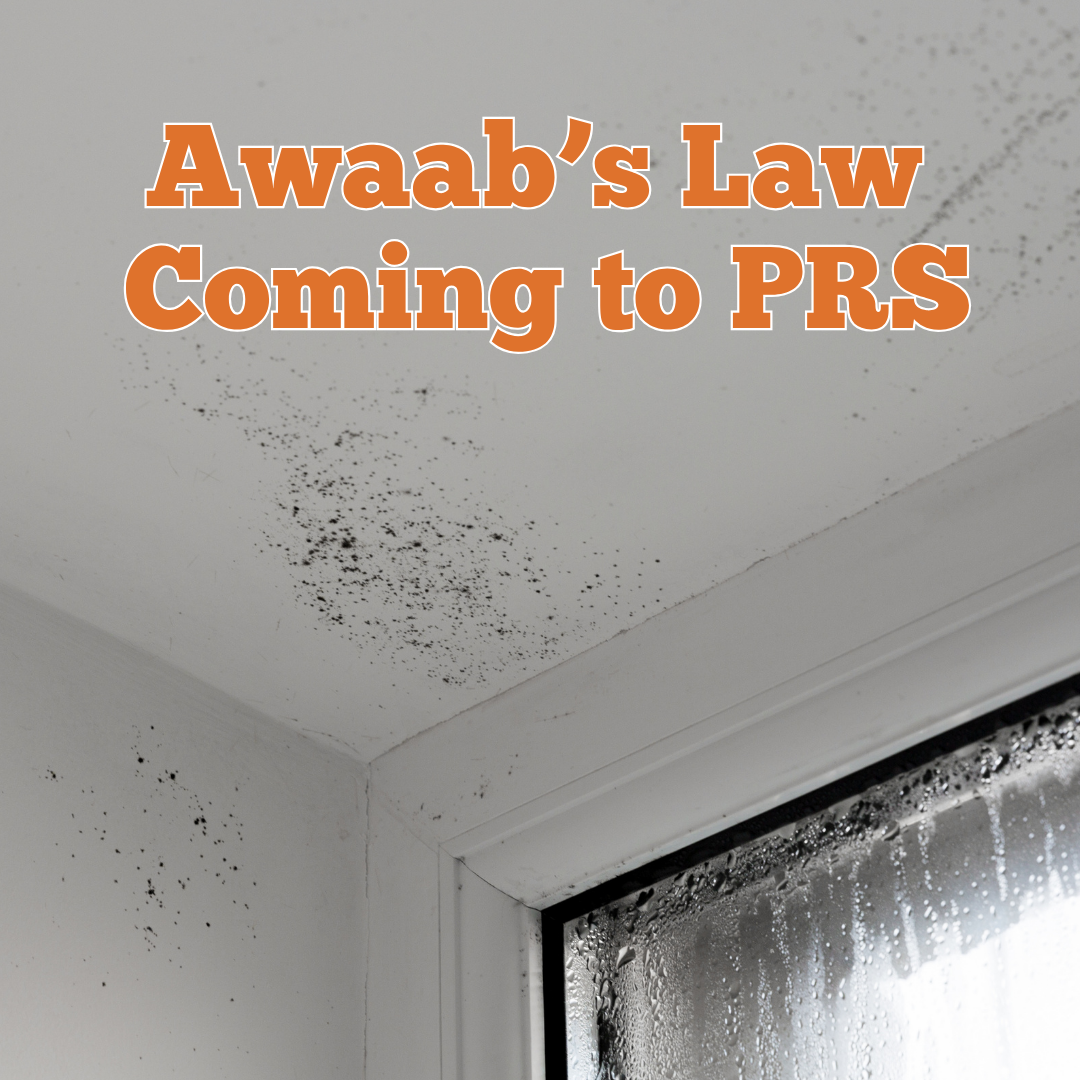
Awaab’s Law is set to bring stricter rules on dealing with serious property hazards to the private rented sector. But what will this mean for landlords, and should you be doing anything differently now?
On 8 October 2026, the Government announced the next step towards extending Awaab’s Law to private rented properties in England, with a new consultation launched to determine how the legislation should work.
The proposed changes could introduce legally binding deadlines for private landlords to investigate and address serious hazards, including dangerous damp and mould.
For landlords across Kent, whether you own a single rental property or manage a portfolio of HMOs and family homes, this is an important development.
And while the final rules have yet to be confirmed, there’s already a clear message: identifying property problems early, responding promptly and keeping proper records will become increasingly important.
What is Awaab’s Law?
Awaab’s Law was introduced following the tragic death of two-year-old Awaab Ishak in 2020, caused by prolonged exposure to mould in his family’s socially rented home.
Despite repeated reports of the problem, the dangerous conditions were not adequately addressed.
The legislation was introduced to ensure that serious health and safety hazards in rented homes are investigated and dealt with within defined timescales.
Awaab’s Law first came into force for social housing in October 2025, initially focusing on serious damp and mould and emergency hazards.
Now, under the Renters’ Rights Act 2025, the Government is preparing to extend similar protections to tenants in the private rented sector.
What is the Government proposing for private landlords?
The Government launched its consultation on 9 October 2026, seeking views on how Awaab’s Law should apply to private rented homes.
The consultation is considering:
- Which serious property hazards should be covered.
- How quickly landlords should investigate reported hazards.
- The timescales for making properties safe and carrying out necessary repairs.
- How and when the new requirements should be introduced.
Although damp and mould are central to the discussion, the legislation could extend to other significant risks, such as excess cold, electrical hazards, fire risks and structural problems.
Importantly, the exact deadlines and implementation date for private landlords have not yet been confirmed.
The Government is using the existing social housing requirements as a starting point but recognises that the private rented sector operates differently.
The consultation closes on 18 December 2026, after which the Government will consider responses before confirming the next steps.
Landlords already have responsibilities – so what is changing?
It’s important to understand that landlords don’t currently have the option of ignoring serious damp, mould or other dangerous conditions while waiting for Awaab’s Law.
Existing legislation already requires private landlords to meet certain repair and safety obligations and ensure their properties are fit for human habitation.
Local authorities also have powers to take enforcement action where serious housing hazards are identified.
The difference with Awaab’s Law is that it aims to introduce clearer, legally enforceable timescales for investigating and addressing qualifying hazards.
In other words, it’s not simply about whether a landlord eventually carries out a repair, but potentially how quickly they investigate, respond and take the necessary action.
And that makes the way landlords manage maintenance reports and property inspections particularly important.
Why regular property inspections matter more than ever
One of the most effective ways to prevent small property problems becoming serious hazards is to identify them early.
Routine inspections give landlords an opportunity to assess the condition of a property beyond what might be reported by the tenant.
For example, an inspection might reveal early signs of mould developing behind furniture, inadequate ventilation, water staining from a slow leak or condensation forming around windows.
These issues may appear relatively minor initially, but if left uninvestigated, they can develop into much more significant problems.
Regular inspections can also provide an opportunity to discuss concerns with tenants, identify maintenance requirements and arrange appropriate follow-up.
However, inspections alone aren’t enough. If a problem is identified, it’s equally important to investigate the cause, arrange appropriate action and make sure the issue has been resolved, and landlords should never wait for the next routine inspection when a tenant reports a potentially serious hazard.
Damp and Mould – fixing the cause, not Just the symptoms
Consider a common situation – a tenant reports mould appearing on a bedroom wall. The landlord arranges for the affected area to be cleaned and repainted, and the problem appears to have been resolved. A few months later, the mould returns.
Was the original issue really fixed?
Perhaps the property has inadequate ventilation, a hidden leak, defective insulation or another underlying problem that wasn’t identified.
Simply removing visible mould without investigating its cause may provide only a temporary solution, and although condensation and everyday household activities can contribute to moisture problems, landlords shouldn’t automatically assume damp and mould are caused by the tenant’s lifestyle. The important thing is to establish what’s causing the problem and take appropriate action.
This is where effective inspections, qualified contractors and good communication between landlords, tenants and managing agents can make a real difference.
Keeping records could become even more important
As expectations around response times become more clearly defined, maintaining accurate records will be increasingly valuable.
Landlords should be able to establish when a maintenance concern was reported, what steps were taken to investigate it, what repairs were arranged and whether the issue was resolved.
For example, if a tenant reports a leak or damp problem, having a clear record of the initial report, contractor attendance, findings, correspondence and completed work can help demonstrate how the issue was managed.
Photographs, inspection reports and maintenance records can also provide useful evidence of a property’s condition over time.
Good documentation doesn’t replace the need to carry out necessary repairs, but it does help create accountability and a clearer history of the actions taken.
What should Landlords be doing now?
Although the final Awaab’s Law requirements for private landlords are still being developed, there is no reason to wait before reviewing how your properties are managed.
A sensible starting point is to consider whether:
- Your properties receive regular, documented inspections.
- Tenants know how to report maintenance concerns.
- Reported hazards are assessed and investigated promptly.
- Contractors are instructed appropriately and repairs followed up.
- Outstanding maintenance issues are monitored until resolved.
- Inspection reports, photographs and maintenance correspondence are properly recorded.
For portfolio landlords, this becomes particularly important when managing multiple properties, contractors and tenants across different locations. The more properties you own, the easier it can become for a maintenance issue or outstanding repair to be overlooked without effective systems in place, and with further regulatory changes approaching, now is a good opportunity to review those arrangements.
Good property management starts before something goes wrong
Awaab’s Law is another reminder that managing a rental property isn’t simply about arranging repairs when something breaks.
Regular property inspections, identifying potential hazards early, responding promptly to maintenance issues and keeping accurate records are all important parts of protecting your tenants and your investment.
At Lifeboat Lettings, our Full Management service helps landlords across Kent stay on top of property inspections, maintenance, contractor coordination and tenancy documentation.
We understand that for many landlords, particularly those with growing portfolios or other work commitments, finding the time to oversee every inspection, maintenance report and repair can become increasingly difficult.
If managing your rental property is taking up more time than you’d like, why not talk to us about our Full Management service?
Let us help you stay on top of the day-to-day responsibilities, so you can spend less time managing problems and more time enjoying the benefits of your investment.
Sources and Further Reading
- GOV.UK – Clampdown on dangerous homes to protect more tenants and families (8 October 2026)
- GOV.UK – Extending Awaab’s Law to private rented tenancies and to licences (9 October 2026)
- GOV.UK – Full consultation document
This article provides general information based on Government proposals published in October 2026 and does not constitute legal advice. The detailed requirements and commencement date for Awaab’s Law in the private rented sector remain subject to further regulations. Landlords should continue to comply with their existing legal obligations and consult official guidance as requirements develop.